What to Wear in Zermatt: What to Pack for the Village and the Peaks
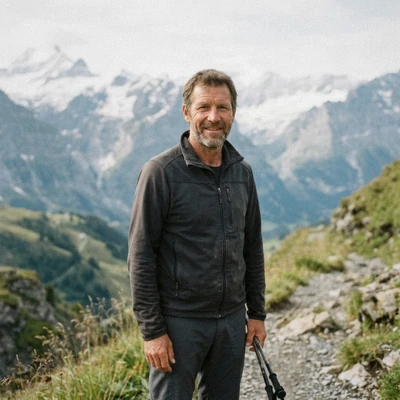
What to wear in Zermatt comes down to one number: roughly 0.6°C colder per 100 meters climbed, so the village outfit rarely works at the top of a lift. Guided tours here already supply the gear that needs certifying, a guide and glacier equipment on the Zermatt glacier hike, an instructor on Zermatt ski lessons, so what is left on your list is shorter than expected. As of July 2026, the village sits at a comfortable 20 to 25°C in summer while Matterhorn Glacier Paradise, at 3,883 meters, can be below freezing that same afternoon. I have watched underdressed visitors shiver at that cable car exit more than anywhere else, and this guide covers what to pack so you are not one of them.
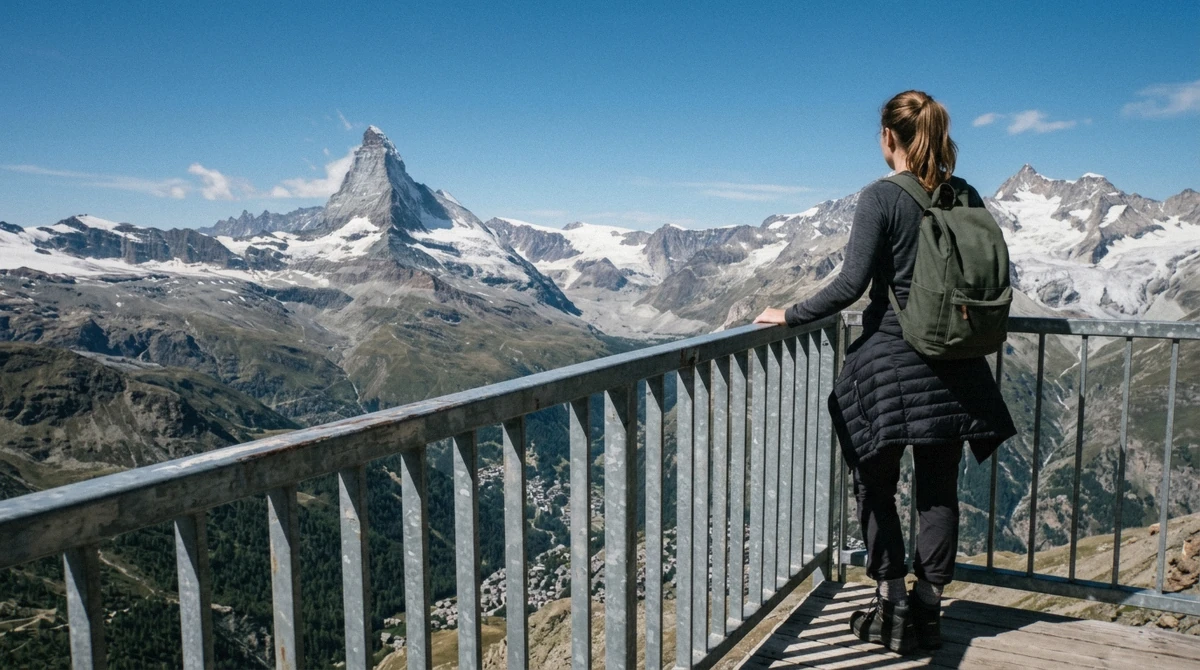
Quick answer
Guided tours in Zermatt supply the technical gear that actually needs certifying, glacier equipment and a mountain guide on the Zermatt glacier hike, a private instructor on Zermatt ski lessons, so what is on you is warm layers, sturdy footwear and sun protection. The single number that matters most is altitude: the village can be a mild 20 to 25°C in July while Matterhorn Glacier Paradise, 3,883 meters up, sits below freezing the same afternoon.
Key takeaways
- Guided tours like the Zermatt glacier hike include technical equipment and a mountain guide, so crampons and rope are not on your packing list
- What is genuinely on you is warm layers, since no tour on this site supplies winter clothing, even in July
- The biggest mistake is dressing for the village and not for the lift station above it
- The village can sit at a comfortable 20 to 25°C in July while Matterhorn Glacier Paradise can be below freezing the same afternoon
- Hiking boots are the default footwear; flip-flops and unsecured sandals are not allowed on any lift platform or the Glacier Palace ice cave floor
- Pack heaviest in winter and the shoulder months, lighter but still altitude-ready through summer
What to Wear
Base Layers
Start with a moisture-wicking base layer, top and bottom, rather than cotton underneath everything else. You will sweat on the walk up from the village or on a climb, and a synthetic or merino base layer keeps that moisture moving instead of trapping it against your skin once the wind picks up at altitude. Everything below assumes a normal sightseeing day on the lifts and trails, the kind of day the Zermatt mountain excursions on this site are built around.
Sun Protection
Alpine sun is stronger than sea-level sun at the same air temperature, and snow around Matterhorn Glacier Paradise reflects a second dose of it back up at your face. High-SPF sunscreen, lip balm with SPF, and sunglasses rated for glacier glare matter even on a cloudy day, since UV exposure at altitude does not track how warm the air feels.
Insulated Outer Layer
Think of this as a when-you-need-it layer, not a blanket rule. In the village in July you may never unpack it. The moment you step off the cable car at 3,883 meters, or ride the open-air Gornergrat railway to 3,089 meters, you will want a windproof, insulated jacket, plus a hat and gloves, over that base layer.
Bring your own; no tour on this list rents or includes winter outerwear.
Footwear
Footwear is where visitors most often get it wrong, so treat it as its own decision rather than an afterthought:
- Sneakers or trainers: fine for paved village streets and light garden paths, not enough grip for icy cobbles in winter or the Glacier Palace ice cave floor
- Hiking boots: the default recommendation for trails, lift-served mountain terrain and any glacier-adjacent walkway; ankle support and grip matter on loose rock
- Insulated snow boots: worth packing for a winter visit to Matterhorn Glacier Paradise or Gornergrat, where platforms sit in snow and wind chill
- Sandals with a secured strap: fine for a hotel terrace or valley-floor lounging in summer, never for a lift ride or the ice cave
- Flip-flops or unsecured sandals: not okay anywhere above the village; you will lose them on cobblestones or ice, and there is no grip on wet cable-car flooring
A quick color and fabric guide, since it comes up more than you would expect at altitude:
| Color / fabric | Good? | Why |
|---|---|---|
| White | Depends | Reflects heat well in strong glacier sun, but shows trail dirt and grease from cable-car machinery fast |
| Black | Depends | Absorbs heat on a warm valley-floor walk, but works fine for an evening in one of Zermatt's restaurants |
| Bright or neon | Yes | Easy to spot in a group photo against snow or dark rock, and easier for a guide to keep track of at a crowded lift station |
| Earth tones (brown, grey, forest green) | Yes | Blend naturally with the wood-chalet and granite look of the old village if you would rather not stand out |
| Cotton | No | Stays damp and cold once you sweat on a climb or catch a passing shower; dries slowly at altitude |
| Quick-dry synthetic or merino wool | Yes | The real default; keeps insulating even damp and dries fast between layers |
What to Bring
Beyond the outfit itself, this is the flat list worth packing before you leave your hotel:
- Windproof, insulated outer layer, gloves and a warm hat, wind chill at 3,883 meters bites even in July
- Sunglasses rated for glacier glare, snow reflects a second dose of UV back at your eyes
- High-SPF sunscreen and SPF lip balm, altitude sun burns faster than it feels
- Hiking boots with ankle support, loose rock and uneven sections above the village
- A light rain shell, afternoon thunderstorms are common May through September
- A refillable water bottle, dry mountain air dehydrates faster than it feels
- A packable base or midlayer, temperatures drop roughly 0.6°C for every 100 meters you climb
- Swiss francs or a contactless card, useful at small village shops and mountain restaurants
- A dry pouch or case for your phone or camera, weather can shift fast at altitude
- A small daypack, layers come off fast once the sun is properly out
- Confirmation and pickup times saved on your phone, useful for early departures
What Zermatt Tours Provide (So You Don't Overpack)
Here is what is actually included on the tours we cover, and what is genuinely still on you:
| Item | Usually provided | Bring your own | Notes |
|---|---|---|---|
| Cable car / cogwheel train ticket | Yes | Warm layers for the summit stations | The Matterhorn Glacier Paradise cable car ticket covers the ride and viewing platform, not clothing |
| Mountain guide | Yes, on the glacier hike and the private walking tour | Nothing extra beyond your own layers | The Zermatt glacier hike includes a certified guide in the price |
| Glacier equipment (crampons, harness, rope) | Yes, on the guided glacier hike | Sturdy hiking boots that fit crampons | Technical equipment is included on the Zermatt glacier hike; it is not needed for the cable car or railway tickets |
| Ski or snowboard instructor | Yes, on private lessons | Skis, boots and ski-specific outerwear | Zermatt ski lessons include a private instructor for the family, not equipment or ski wear |
| Paragliding harness and safety gear | Yes, with the certified tandem pilot | Warm layers and closed shoes for the launch point | Zermatt paragliding includes the flight and safety gear; launch sites sit well above the village |
| Round-trip transport on day trips | Yes, coach and train | Layers for the optional cable car add-on | Day trips from Geneva, Lausanne or Zurich cover the journey to Zermatt; Glacier Paradise is often an optional add-on, not automatic |
| Live tour guide on group day trips | Only on some day trips | Comfortable walking shoes for free time in the village | Some day trips include a live guide throughout; others leave village time unguided |
| Warm outer layers, hats and gloves | No, on any tour | Yes, always | No tour on this list supplies winter clothing, even in July, since the summit stations run cold year-round |
What NOT to Wear or Bring
A few real mistakes we see repeated season after season:
- Cotton everything: chafes and stays wet and cold once you sweat on a climb or catch a passing shower
- Jeans on the glacier hike or ski lessons: they restrict movement and take hours to dry if they get wet
- Heels or flip-flops on any lift or the Glacier Palace ice cave floor: both are cold, wet, and the fastest way to be turned back politely at a cable car gate
- An untucked scarf near ski-lift machinery: a genuine snag hazard on a drag lift or T-bar
- A drone without checking local rules first: cable-car infrastructure and the wildlife zones around Zermatt are not blanket drone-friendly, confirm before you fly one
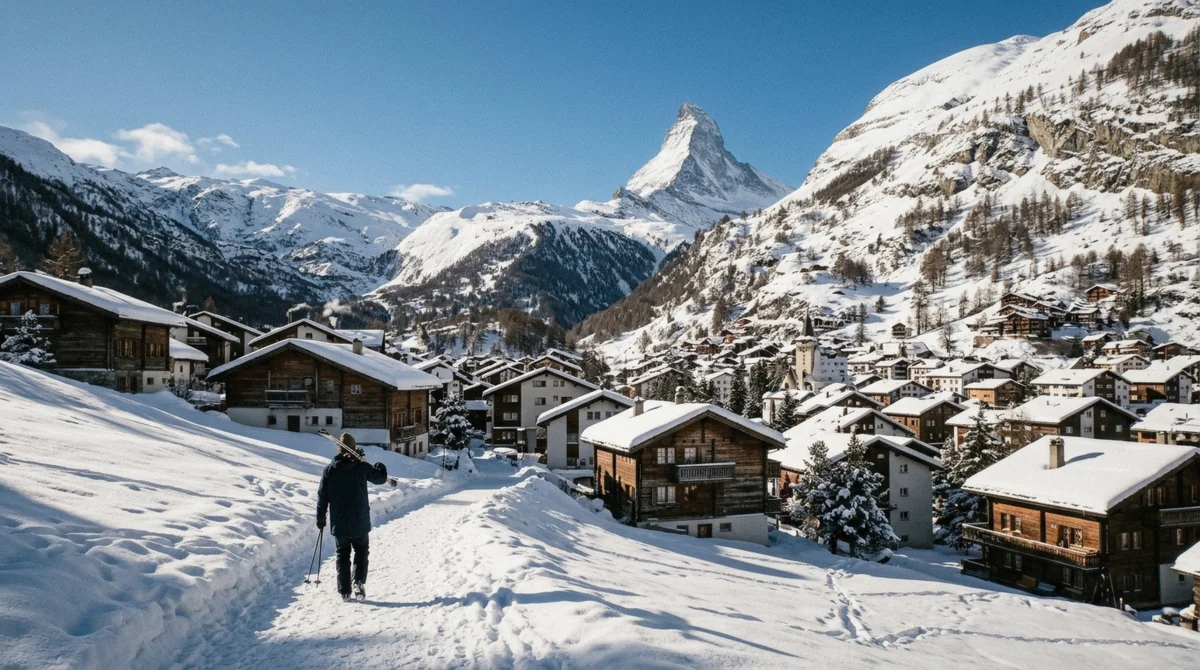
Packing by Season in Zermatt
Full guide to which months suit which activity is in our best time to visit Zermatt post; here is what to actually pack in each one:
| Season | Wear this |
|---|---|
| Winter (December to March) | Full insulated system: base layer, fleece midlayer, waterproof and windproof shell, insulated snow boots, wool hat and gloves; add ski-specific layers if you are on the slopes. January averages -3.3°C in the village |
| Spring (April to May) | Base layer and midlayer with a packable shell for the village, where April averages 1.7°C and May 4.8°C; keep full winter layers on hand for any Matterhorn Glacier Paradise trip |
| Summer (June to September) | Light layers, a sun hat and short sleeves are genuinely fine at valley level, where July averages 14.2°C with daytime highs commonly 20 to 25°C; pack a real insulated jacket for any lift above the village regardless |
| Autumn (October to November) | A warm midlayer and a windproof shell cover most days as temperatures cool toward winter; add gloves once you are heading toward Gornergrat or the glacier |
Whatever the season, the rule stays the same: the village outfit and the summit outfit are rarely the same outfit.
Dressing for an Early Train or Cable Car
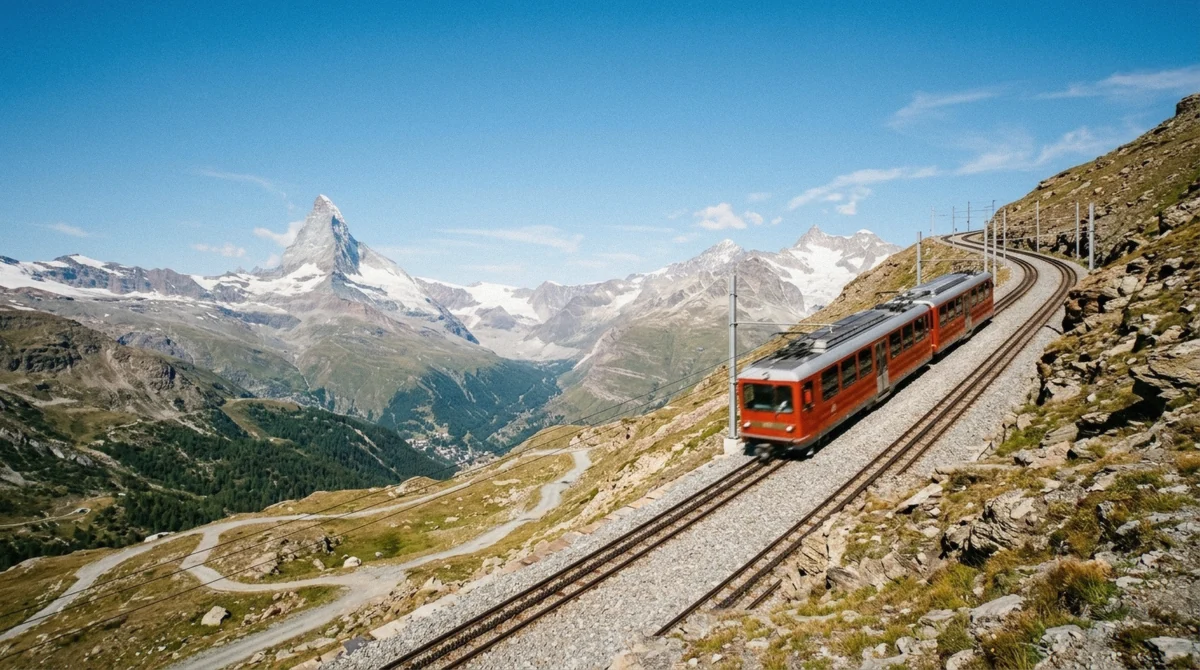
The best light on the Matterhorn comes early, and that means dressing for a cold start even in July. If you are booking the first Gornergrat railway departure or an early cable car up to Matterhorn Glacier Paradise, layer heavy for the ride, a full shell, hat and gloves on top of your base layer, then peel down once you are back in the village by mid-morning and the day has warmed up. Cold drains camera and phone batteries faster than most people expect, so keep spares in an inner pocket rather than an outer one, where body heat helps them last.
Grab a window seat on the train; the open-sided carriages give clear views from either side, so there is no wrong side to sit on, just a wrong hour to travel in.
Dress for the Village and the Summit in One Day
Most visitors combine a village morning with a lift ride the same day, and the trick is removable layers rather than two separate outfits. Start in a base layer and a light jacket for the village at 20 to 25°C, add a packed insulated shell, hat and gloves right before the cable car doors open, then peel back down to the base layer for lunch in the village afterward. Keep the heavy layer compressed in a small daypack rather than worn the whole day; you will only need it for the 20 to 30 minutes around the summit platform itself.
Frequently Asked Questions
Can I wear jeans in Zermatt?
Generally no for hiking, the glacier hike or ski lessons, since jeans restrict movement and take hours to dry once wet or sweaty. They are fine for a relaxed evening in the village.
Can I wear shorts in Zermatt?
Yes, in the village in summer, when daytime highs commonly reach 20 to 25°C. No at altitude, where Matterhorn Glacier Paradise can sit below freezing the same afternoon.
Do I need snow boots if I am visiting in summer?
Not in the village, but pack real insulated layers regardless of the month for any trip up to Matterhorn Glacier Paradise or Gornergrat, since both sit well below village temperature year-round.
What should I not bring to Zermatt?
Skip cotton clothing, jeans for anything active, and heels or unsecured sandals for any lift or the Glacier Palace ice cave. All three cause real problems once you are off the village streets.
Does the Matterhorn Glacier Paradise ticket include warm clothing?
No. The ticket covers the cable car ride and access to the viewing platform and Glacier Palace, not clothing. Warm layers are on you, every time of year.
Will my phone or camera battery drain faster at altitude?
Yes, cold drains batteries noticeably faster. Keep spares in an inner pocket close to your body rather than an outer one, and expect a shorter battery life at 3,883 meters than at the village hotel.
How much colder is it at the top than in the village?
Roughly 0.6°C colder for every 100 meters of ascent, which works out to about 9 to 10°C colder at Gornergrat and 13 to 15°C colder at Matterhorn Glacier Paradise than the village at the same hour.
Pack for the altitude, not the forecast in the village. A base layer, a genuine insulated outer layer, gloves, a hat and proper footwear cover almost every situation a Zermatt trip puts in front of you, and the technical gear that actually matters, crampons, harnesses, ski equipment, comes with the guided tours that need it. Check Zermatt without a tour if you are planning to do any of this independently, since the packing list gets a little longer once nobody is carrying a rope for you.
Compare Zermatt mountain excursions once your bag is packed.