Best Time to Visit Zermatt: Month-by-Month Guide
The best time to visit Zermatt is June through September for hiking and December through March for skiing, the two windows when every trail or lift is actually open and daytime conditions are most reliable. Shoulder months, April, May and November, run cheaper, but come with real lift closures while crews service the cable cars for the season ahead. As of July 2026, the village sits at 1,620 meters and stays snow-covered roughly November through April, so the calendar shapes almost everything about a visit here, not just the scenery. I have guided through every one of these seasons for more than fifteen years here, and this guide covers what each delivers, plus what to do if the mountain hides in cloud on the morning you planned for it.
Quick answer
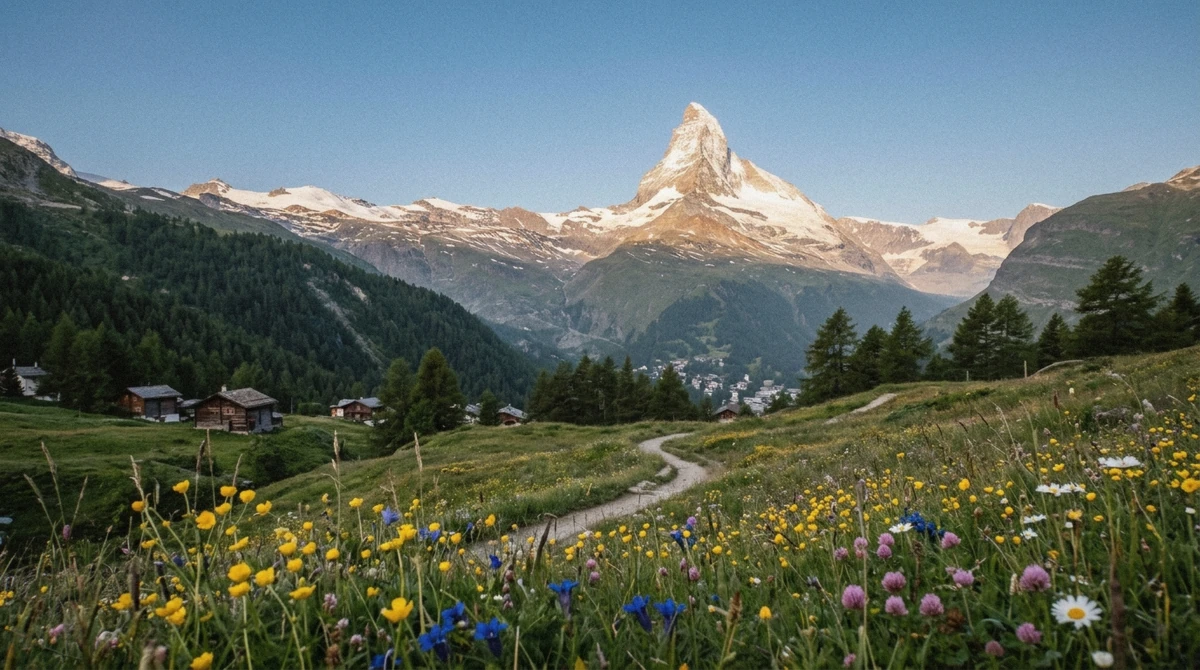
The best time to visit Zermatt is June through September for hiking, when every trail and lift is running and daytime highs in the village commonly reach 20 to 25 degrees Celsius, or December through March for skiing, when both the village slopes and the glacier terrain are open. April, May and November are the cheapest months, but they carry real lift closures while crews service the cable cars, and the Matterhorn itself is clearest in the early morning, before cloud typically builds through the day.
Key takeaways
- June through September is the best window for hiking, with every trail and lift open and warm, dry daytime conditions
- December through March is the best window for skiing, when both the village slopes and the glacier at Matterhorn Glacier Paradise are open
- Shoulder months May and November run 25 to 40 percent cheaper on hotels, but several lifts close for maintenance
- Around April 21 most village ski lifts pause for the season while the glacier link to Matterhorn Glacier Paradise keeps running
- The Matterhorn is clearest in the early morning; cloud typically builds over the summit by late morning or afternoon
- Peak crowds hit in July and August for hiking, and over Christmas, New Year and February for skiing
Seasons at a Glance
Here is how the four seasons compare on weather, lift access and crowds. Read the Verdict column first if you are choosing a month right now: Once you have a season in mind, you can match it against the full range of Zermatt tours and excursions to see what actually runs in those months.
| Season | Weather | Lifts open | Crowds | Verdict |
|---|---|---|---|---|
| Winter (December to March) | Cold and often snowy; January is the coldest month, averaging -3.3°C | Ski season runs late November through early May; glacier skiing at Matterhorn Glacier Paradise runs 365 days a year | High over Christmas, New Year and the February school holidays | Best for skiing |
| Spring (April to May) | Warming slowly; April averages 1.7°C, May 4.8°C | Most village ski sectors close for maintenance around April 21; the Zermatt to Matterhorn Glacier Paradise link keeps running | Low, the quietest stretch of the year | Cheapest, but real lift gaps |
| Summer (June to September) | Warmest of the year; July averages 14.2°C with daytime highs commonly 20 to 25°C; afternoon thunderstorms are common May through September | Every hiking trail and lift open from mid-June; hiking season runs to mid-October | Peak in July and August | Best overall |
| Autumn (October to November) | Cooling toward winter | Hiking season winds down by mid-October; ski season does not resume until late November, a genuine lift gap in early to mid-November | Low | Best value, mind the gap |
Two windows do the heavy lifting on this calendar: summer for hiking, winter for skiing. Land in a shoulder month and plan around the lift closures rather than assuming everything you have read about Zermatt is running.
Village Temperatures Through the Year
The village sits at 1,620 meters, and the verified monthly averages swing more than most visitors expect for an Alpine valley this low:
| Month | Typical average | Note |
|---|---|---|
| January | -3.3°C | Coldest month of the year, reliable snow cover |
| April | 1.7°C | Early shoulder, lift closures begin around April 21 |
| May | 4.8°C | Cheapest month, hiking trails still closed at altitude |
| July | 14.2°C | Warmest month, daytime highs commonly reach 20 to 25°C |
Snow typically covers the village from November through April, and the wettest stretch of the year runs May through September, mostly as afternoon thunderstorms rather than all-day rain. These figures align with long-term averages from MeteoSwiss for the Valais region; check the current forecast close to your dates, since any single week can run warmer or colder than the average.
Best Season by Traveler Type
If a skier
come between December and March and book before the Christmas, New Year and February school-holiday weeks fill the best instructor slots. Private Zermatt ski lessons can usually still be arranged even in a fuller week.
If a hiker
aim for late June through September, when the high trails are reliably snow-free and every lift used to reach them is running. A guided Zermatt glacier hike only runs in this same window.
If a photographer
book an early morning departure any time from June to September, since the Matterhorn is clearest before the cloud cap builds later in the day.
If traveling with family
plan June through September, when daytime highs sit in a comfortable 20 to 25°C range and there is no risk of a ski-season lift closure disrupting the day.
If on a budget
travel in May or November, when hotels run 25 to 40 percent below peak rates, but confirm which lifts are actually open before you book, since this is exactly when several close for maintenance.
Winter (December to March): Reliable Snow and a Hushed Village
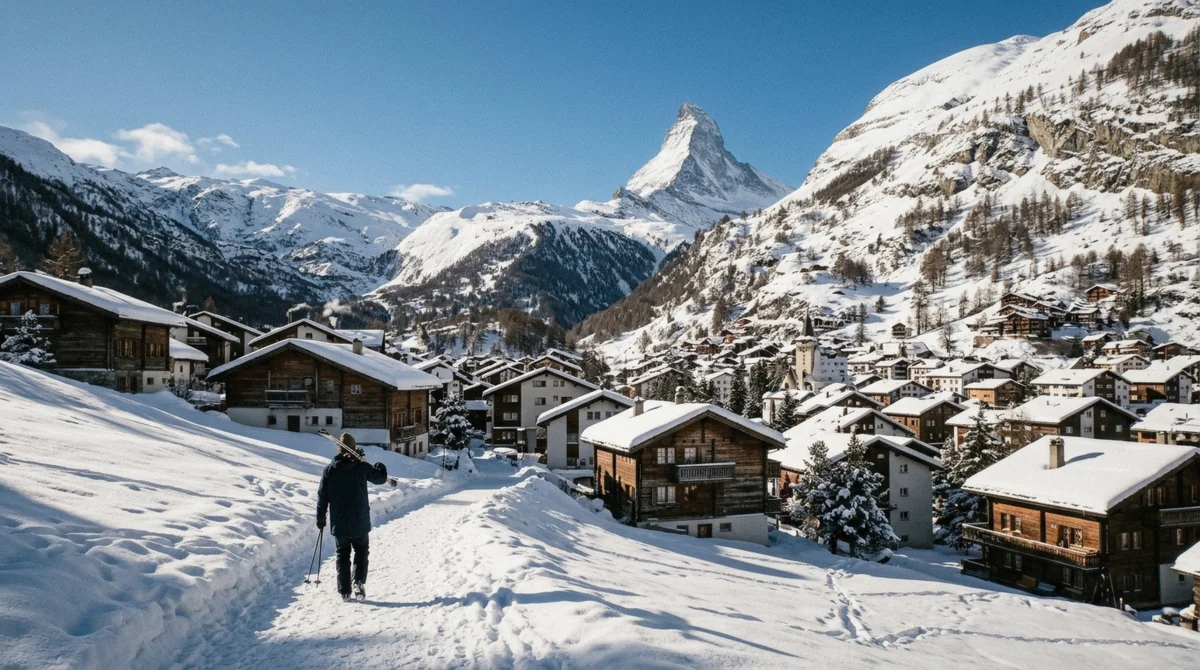
Winter is when Zermatt runs on skis. The village slopes and the glacier terrain at Matterhorn Glacier Paradise cable car are both open, and January, the coldest month of the year at an average of -3.3°C, brings the most reliable snow cover in the valley. Streets stay quiet on weekdays outside the main holiday weeks, and the village takes on the hushed, lantern-lit feel most visitors picture when they imagine an Alpine winter.
The trade-off is the calendar: book ski instructors and family lessons well ahead of Christmas, New Year and the February school holidays, since local operators sell those weeks out first. If you want flexibility without the group-lesson scramble, Zermatt ski lessons booked privately can usually be arranged even in a fuller week. Check current snow conditions directly with the lift operator's own glacier snow report before a winter trip.
- January averages -3.3°C, the coldest month of the year
- Ski season runs late November to early May; glacier skiing runs all year
- Busiest over Christmas, New Year and the February school holidays
- Book instructors two to three weeks ahead outside holiday weeks
Spring (April to May): The Cheapest Window, With Real Lift Gaps
Spring is Zermatt's honest bargain season, and also its most disrupted one. April averages 1.7°C and May 4.8°C, mild enough that snow starts retreating from the village itself, but cold enough that the high mountain stays properly wintry. Around April 21 most of the village's own ski sectors, Sunnegga, Blauherd, Rothorn and the Gornergrat-side lifts, close for several weeks of scheduled maintenance.
The cable car link from Zermatt through Furi and Trockener Steg up to Matterhorn Glacier Paradise cable car keeps running through the gap, so the glacier viewpoint stays reachable even when the rest of the lift network is shut. Hotel rates drop 25 to 40 percent below peak, but hiking season has not started yet at altitude, since the high trails only clear from late June. If a glacier day is the one thing on your list, spring still delivers it; a village walk fills the rest of the itinerary well.
- April averages 1.7°C, May 4.8°C, mild in the village, still wintry higher up
- Village ski sectors close for maintenance from around April 21
- Matterhorn Glacier Paradise stays open through the gap
- Hotels run 25 to 40 percent below peak rates
Summer (June to September): Every Trail Open, Warmest Days
Summer is Zermatt's busiest and most complete season, and for good reason. Hiking season opens in mid-June once the high trails clear of snow and runs to mid-October, so this four-month stretch is the only time every trail, lift and mountain restaurant operates at once. July is the warmest month, averaging 14.2°C, with daytime highs commonly reaching 20 to 25°C in the village itself, warm enough for short sleeves at lunch even with snow visible on the peaks above.
Afternoon thunderstorms are common from May through September, usually brief and burning off by evening, so mornings are the more reliable half of the day. Even in that daytime warmth, temperatures drop fast once you climb toward the glacier; our full guide to what to wear in Zermatt covers the exact layers by altitude. This is also the only season for a guided Zermatt glacier hike onto the ice near 4,000 meters, and the season when Zermatt paragliding flights run most consistently.
The cost of all this is crowding: July and August are the two busiest months of the year, and popular morning departures can sell out days ahead.
- July averages 14.2°C, the warmest month, daytime highs commonly 20 to 25°C
- Hiking season runs mid-June to mid-October, every trail and lift open
- Afternoon thunderstorms common May through September; mornings are more reliable
- July and August are the busiest months of the year
Autumn (October to November): Quiet Trails Before the Snow Returns
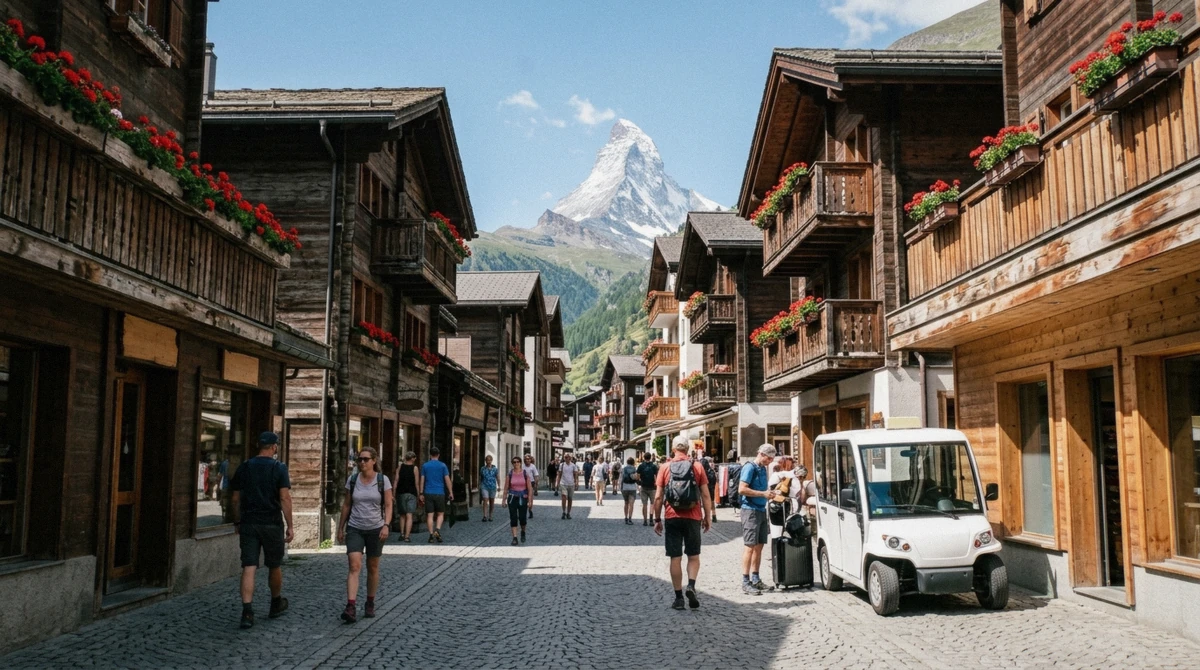
Autumn splits into two very different halves. Early October still carries summer's momentum: hiking season runs to mid-October, trails are dry, and the crowds of July and August have already thinned. By November the picture flips.
Hiking season has closed at altitude, and ski season does not start again until late November, which leaves a genuine lift gap in the first half of the month. What autumn does offer, consistently, is value. October and November sit among the cheapest months of the year to visit, and midweek in early October, before the shoulder-season gap sets in, is arguably the quietest good window on this whole calendar for a Gornergrat railway ride with a thin crowd.
- Hiking season runs to mid-October, then closes at altitude
- Ski season does not resume until late November, a real lift gap early in the month
- October and November are among the cheapest months of the year
- Early October combines dry trails with thinning crowds
What Actually Affects the View
Ask anyone who has spent a season here and they will tell you the same thing: the biggest variable on a Zermatt trip is not the month, it is the hour. The Matterhorn builds its own weather. Warm air rises off the rock face through the morning, and by late morning or early afternoon that convection routinely builds a cap of cloud around the summit, even on days that started perfectly clear.
This happens in every season and in nearly every kind of weather pattern, which is why a clear photo taken at 7:00 and a cloud-wrapped summit at 13:00 on the very same day is the single most common complaint from first-time visitors. Nothing here is ever promised. Cloud around the peak is common enough that we never tell a guest a clear view is certain, only that the odds are consistently better before it builds.
The practical fix is simple: treat the summit as a morning subject, not an afternoon one, and build your Gornergrat or Matterhorn Glacier Paradise trip around an early departure rather than a leisurely one.
Best Time of Day
If you take one piece of advice from this guide, take this one: go early. The Matterhorn is most reliably visible in the first hours after sunrise, before the afternoon cloud cap described above has a chance to build, and mountain light is softer and less hazy in the morning besides. The first Gornergrat railway departures of the day consistently deliver the clearest views of the season, and the same logic applies to Matterhorn Glacier Paradise cable car, where an early cable car beats a midday one on visibility alone almost every time.
The one exception is a winter powder morning right after a storm clears, when late morning can occasionally out-do the dawn light. Outside of that specific case, morning wins.
Crowds and Prices Through the Year
Two specific windows account for most of the congestion here. July and August coincide with school holidays across Europe, and the busiest midday departures on the Gornergrat railway and Matterhorn Glacier Paradise cable car can run standing room only; arriving before 9:00 avoids most of it. On the ski side, the week around Christmas and New Year and the February school holidays fill instructor slots and restaurant tables first, sometimes weeks ahead.
Outside those specific windows, even peak season feels manageable, since the village and mountain network absorb visitor traffic well. Prices track the same calendar: hotel rates run 25 to 40 percent lower in May and November than at midsummer or midwinter peak, the honest trade-off being the lift closures already covered above.
What If the Weather Turns?
Light rain or a cloudy summit rarely stops a trip here outright. The railways and cable cars keep running through drizzle and through the low cloud that regularly wraps the Matterhorn, since the infrastructure is built for Alpine conditions, not fair-weather ones. What does occasionally pause things is high wind or heavy snowfall at altitude, which can shut a specific gondola stage for safety reasons for a few hours at a time.
If your one non-negotiable is the summit view itself, keep a spare morning in your itinerary rather than a spare afternoon, and check conditions the evening before rather than assuming the forecast from a week out still holds. Most guided tours here offer free cancellation up to a set window before departure, so confirm that window at checkout rather than after the fact.
Frequently Asked Questions
What is the best month to visit Zermatt?
For most visitors it is July or August for hiking, or January or February for skiing. Both windows put every lift and trail in operation and give the most reliable weather of their respective seasons, though July and August are also the busiest months of the year.
Is Zermatt worth visiting in November?
Yes, with a caveat. November is one of the cheapest months to visit and the village is genuinely quiet, but hiking season has closed at altitude and ski season has not yet started, so this is the one stretch of the year with the fewest lifts actually running. Our honest look at is Zermatt worth visiting covers this trade-off in more depth.
When is the Matterhorn least likely to be hidden by clouds?
In the first hours after sunrise, in any season. Cloud typically builds around the summit through the late morning and afternoon as warm air rises off the rock face, so an early Gornergrat or Matterhorn Glacier Paradise departure gives you the best odds, never a guarantee.
Are Zermatt's ski lifts open all year?
Not village-wide, but glacier skiing at Matterhorn Glacier Paradise runs 365 days a year. Village ski sectors like Sunnegga, Blauherd and Rothorn run from late November through early May, with a maintenance closure across most of them starting around April 21.
What is the coldest month in Zermatt?
January, averaging -3.3°C in the village, with reliable snow cover from around November through April.
Is spring a good time to visit Zermatt?
It is the cheapest season, with hotel rates 25 to 40 percent below peak, but expect real lift closures from around April 21 as crews service the cable cars, and note that high-altitude hiking trails do not open until late June.
How far ahead should I book a Zermatt tour in July or August?
At least two to three weeks ahead for popular morning departures on the Gornergrat railway or Matterhorn Glacier Paradise cable car, since these are the two busiest months of the year.
If hiking is the priority, June through September delivers the most complete version of Zermatt, every trail, every lift, and the warmest village weather of the year, at the cost of the busiest crowds. If skiing is the priority, December through March does the same on snow. Shoulder months trade real lift access for real savings, so go in with your eyes open rather than assuming a quiet month means a fully open one.
Whatever the calendar says, book an early morning for the Matterhorn itself; that single choice matters more than the month you pick. Compare Zermatt tours and excursions once you have a season in mind.